1 Intro to security
one short security - aws security - last min rev
NACL = subnet level
security group = instance level
Types of firewall in EC2
In EC2, there are two main types of firewalls:
-
Security Groups: Act as virtual firewalls for EC2 instances to control inbound and outbound traffic. They are stateful, meaning if you allow inbound traffic, the response is automatically allowed.
-
Network Access Control Lists (NACLs): Operate at the subnet level, controlling inbound and outbound traffic for all instances within a subnet. They are stateless, meaning responses must be explicitly allowed.
Ransomware
Ransomware is a type of malicious software (malware) that encrypts a user's files or locks access to their system, demanding a ransom from the victim in exchange for the decryption key or to regain access. It often spreads through phishing emails, malicious attachments, or compromised websites.
CIA triad
The CIA Triad represents three core principles of information security:
- Confidentiality: Ensures data is only accessible to authorized users.
- Integrity: Ensures data remains accurate and unaltered.
- Availability: Ensures data and systems are accessible when needed.
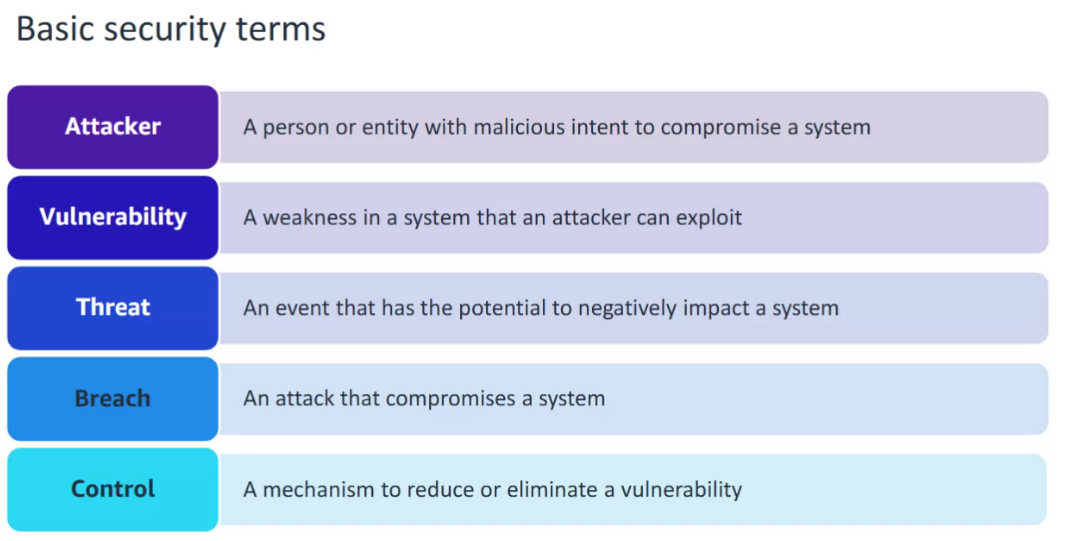
Types of threats
| Threat Name | Description |
|---|---|
| Malware | Malicious software that disrupts or gains unauthorized access to computer systems. |
| Phishing | Deceptive emails or websites tricking users into revealing sensitive information. |
| DoS/DDoS | Overloading a system with traffic (DoS) or using multiple sources (DDoS) to render it inaccessible. |
| Man-in-the-Middle | Interception of communication to eavesdrop, manipulate data, or impersonate parties. |
| SQL Injection | Exploiting web application vulnerabilities to gain unauthorized database access. |
| Zero-Day Exploit | Attacks exploiting unknown software vulnerabilities before they are patched. |
| Insider Threat | Misuse of access privileges by individuals within an organization. |
| APT | Sophisticated, prolonged attacks targeting high-value assets. |
| Ransomware | Encrypts files or locks systems, demanding ransom for decryption. |
| Social Engineering | Psychological manipulation to deceive users into compromising security. |
What , When , Who
- What (Security measures to implement - Security Controls):
- What: Specific security measures or controls like encryption, firewalls, and access controls.
- When (When to implement security measures - Security Lifecycle):
- When: Throughout the security lifecycle, from initial deployment to ongoing operations and updates.
- Who (Who is responsible for implementing security measures - Security Responsibilities):
- Who: Assigned to administrators, DevOps teams, and security personnel, with clear roles and responsibilities for implementation and maintenance.
Security controls
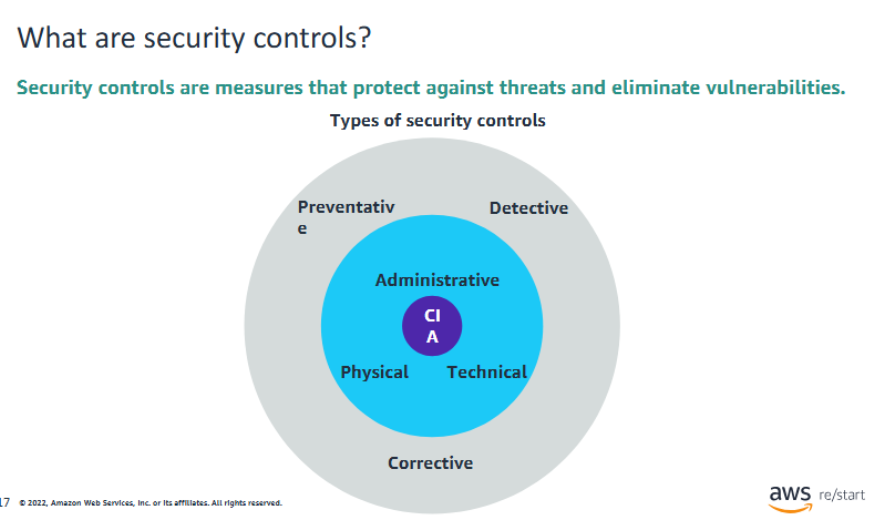
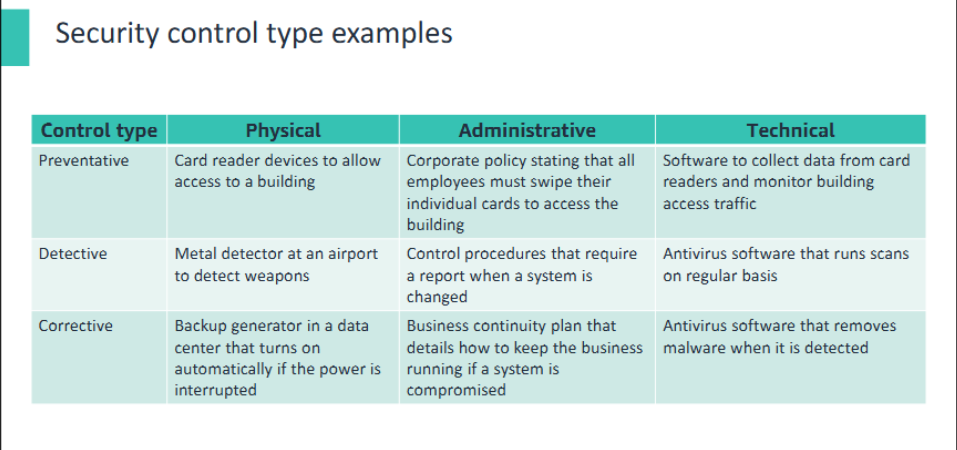
- Physical Controls: Directly protect physical assets, like card readers for building access.
- Administrative Controls: Establish policies and procedures, such as requiring card swipes for access.
- Technical Controls: Use software or technology, like antivirus programs, to monitor and protect against threats.
What is social engineering
Social engineering is a type of security threat where an attacker uses human interaction to manipulate a person into revealing sensitive information.
What does cloud security strategy define
- what security measures to implemet (security controls)
- when to implement security measures (security lifecycle)
- who is responsible to implement security measures(security responsibility)
In which phase of sec. lifecycle are security counter measures implemented
In the prevention phase of the secuity life cycle